The Evolution of Khussa in Pakistan and Its Revival by TJK Designs
Khussa is one of Pakistan’s most recognized forms of traditional footwear, shaped by centuries of craftsmanship and cultural exchange. The evolution of khussa in Pakistan reflects shifts in society, fashion preferences, and artisan techniques. Today, this heritage footwear is experiencing a renewed presence through brands that respect tradition while adapting to modern wear. TJK Designs stands among those shaping this revival with purpose and precision.
Origins That Shaped a Cultural Identity
Khussa footwear traces its earliest roots to leather shoes worn across Asia, later refined in the subcontinent through local materials and techniques. In regions like Multan, Bahawalpur, and Punjab, artisans developed sturdy soles using buffalo hide and softer uppers from cow leather. These shoes were created without left or right distinction, allowing the leather to mold naturally to the foot over time.
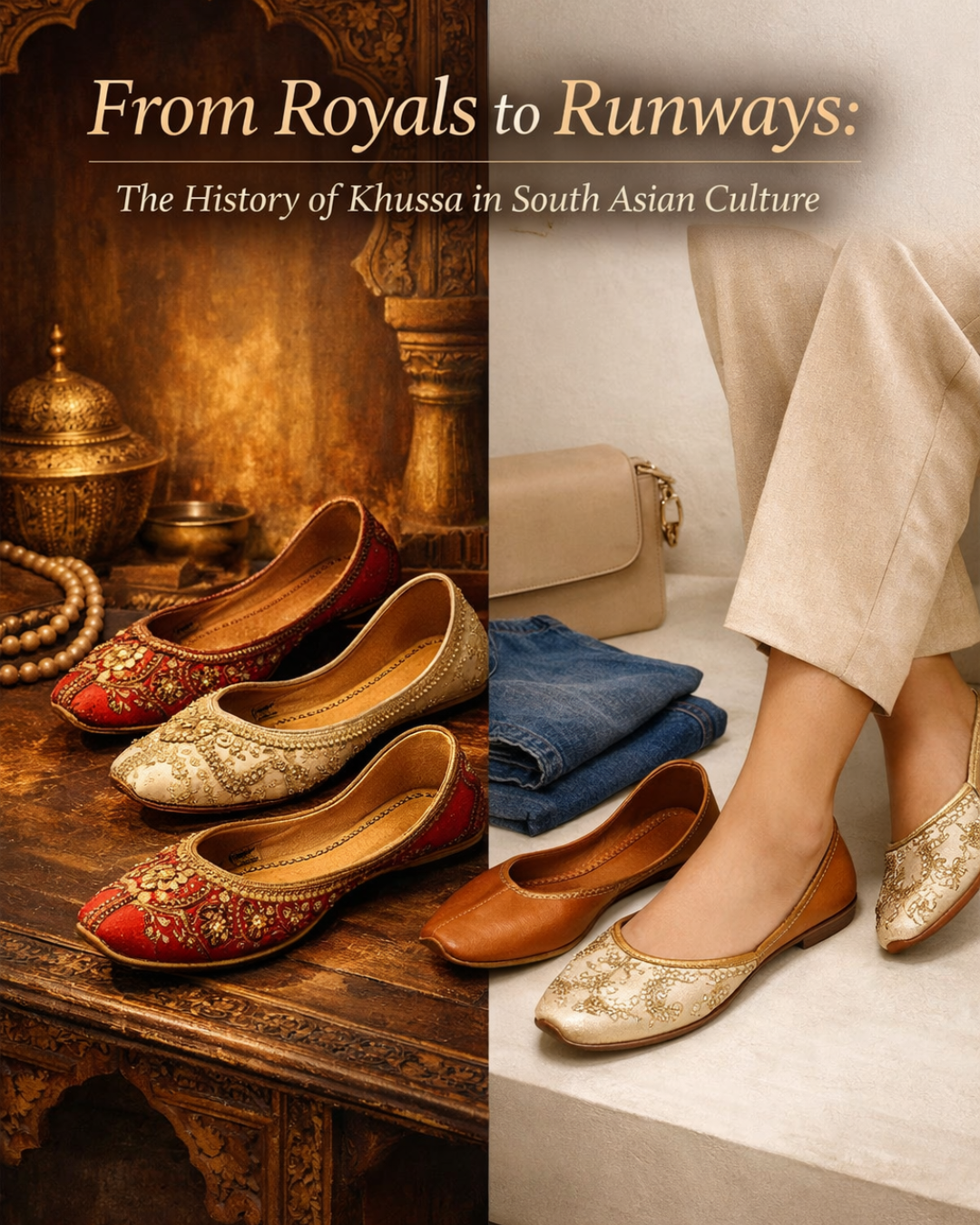
During the Mughal era, khussas gained prominence within royal courts. Embroidery, metal embellishments, and fine threadwork elevated them from everyday wear to symbols of status. This period marked a turning point in the evolution of khussa in Pakistan, blending utility with refined aesthetics.
From Everyday Wear to Fashion Expression
As centuries passed, khussas continued to evolve while remaining accessible to the masses. Designs simplified for daily use, while festive versions retained decorative elements. In the mid 2000s, global fashion trends influenced a shift toward lighter silhouettes and vibrant colors. Ballet flat styles inspired modern interpretations, leading to khussas that paired easily with both traditional and contemporary outfits.
This transition connected heritage footwear with modern lifestyles. The cultural relevance remained intact, but styling became more versatile. That balance is often explored in discussions around khussa styling across generations
Craftsmanship That Defines Authentic Khussa
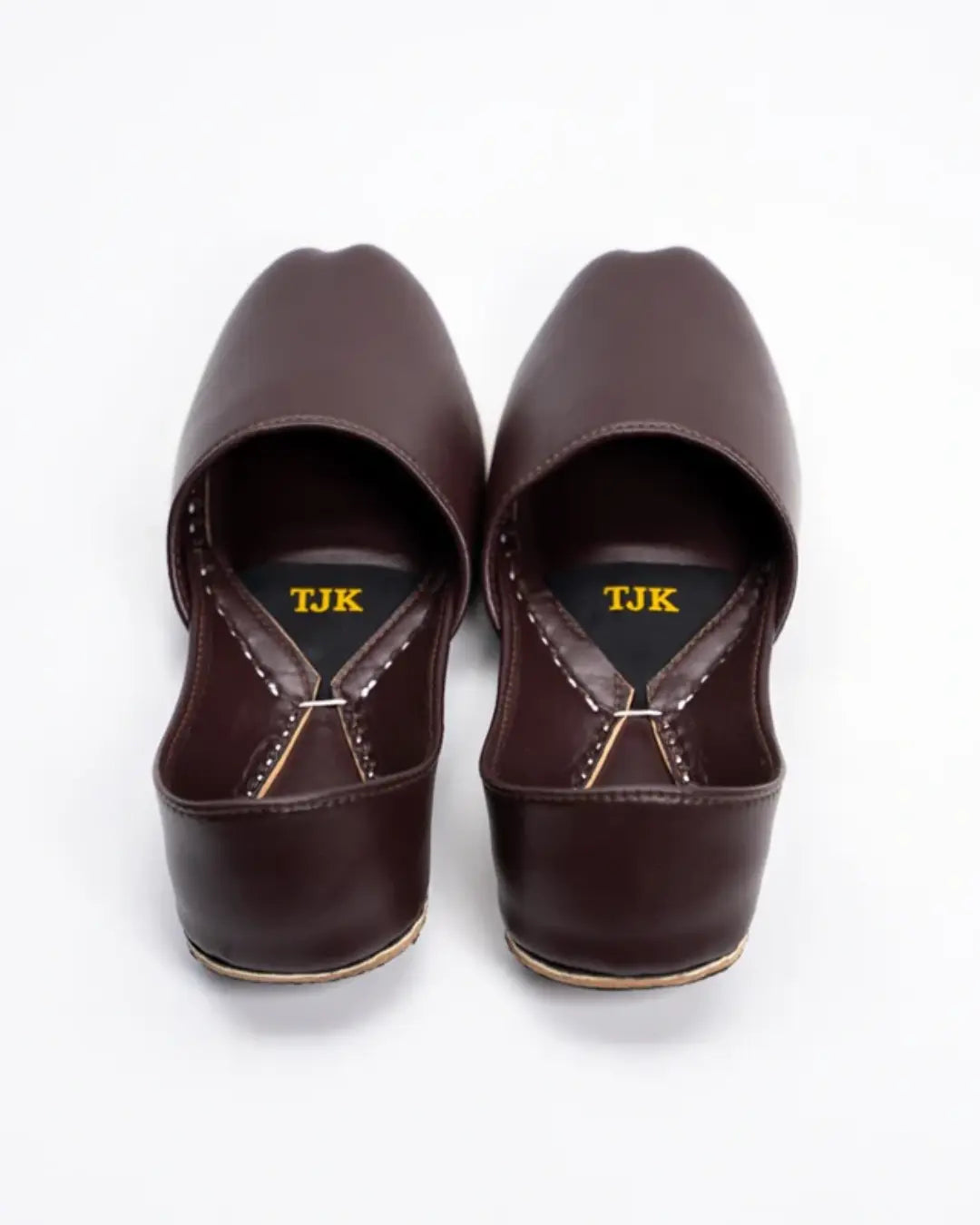
Traditional khussas rely on skilled handwork passed down through generations. Artisans focus on leather preparation, stitching techniques, and surface detailing that ensure comfort and durability. Materials like mirrors, beads, zari, and brass nails remain central to classic designs.
Key elements that define authentic craftsmanship include:
Hand Cut Leather Construction
Each pair is shaped manually to ensure flexibility and long term comfort.
Detailed Surface Embellishment
Embroidery and decorative work are applied with precision, preserving regional aesthetics.
Durable Sole Design
Thick leather soles provide structure while adapting to foot shape with wear.
Understanding these elements helps distinguish genuine khussas from mass produced alternatives, a topic often expanded in guides like traditional footwear authenticity.
Read About: Step into Style: Discover the Allure of Khussa Corner – Your Ultimate Guide to Traditional Footwear
How TJK Designs Is Reviving Khussa Culture
TJK Designs plays a visible role in bringing khussa back into everyday and festive fashion. The brand focuses on handcrafted collections that respect traditional forms while incorporating refined color palettes and functional upgrades. Designs consider local climate needs, comfort for long wear, and styling flexibility.
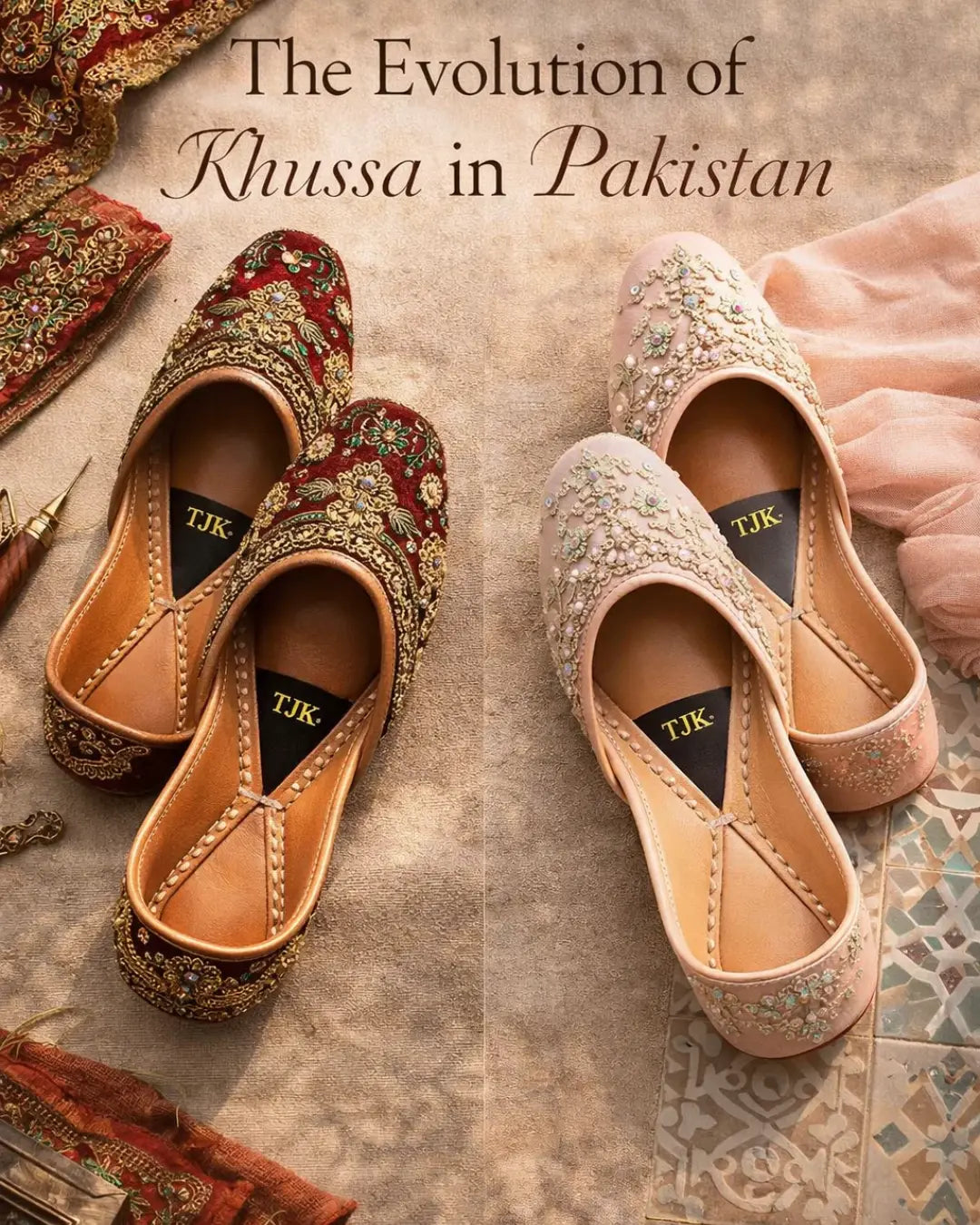
Collections feature soft pastels, bold ethnic tones, and bridal detailing. Custom options allow personalization in embroidery and color selection, aligning heritage footwear with modern expectations. This approach supports artisans while meeting contemporary quality standards.
Khussa in Modern Pakistani Fashion
Today, khussa is worn across age groups and occasions. Brides choose embellished pairs for wedding wear, while everyday styles pair comfortably with casual outfits. Fashion designers continue to integrate khussas into seasonal collections, reinforcing their cultural value.
This renewed popularity highlights how heritage footwear adapts without losing identity. Seasonal styling conversations often reference khussa fashion across Pakistani weather.
Read about: Seasonal Styling: Khussa Fashion Through Pakistani Weather
Preserving Heritage While Moving Forward
The future of khussa depends on sustained appreciation for craftsmanship and cultural roots. Brands that invest in quality, artisan partnerships, and thoughtful design help preserve this legacy. TJK Designs continues to contribute by maintaining authenticity while refining usability for modern wearers.
Conclusion and Brand CTA
The evolution of khussa in Pakistan tells a story of resilience, artistry, and cultural continuity. From royal courts to modern wardrobes, this footwear remains a symbol of identity. TJK Designs honors that journey through handcrafted collections that respect tradition and meet present day style needs. Explore authentic khussas that reflect heritage with elegance.
FAQs People Also Ask
What is the history of khussa shoes in Pakistan?
Khussa shoes developed through centuries of artisan craftsmanship, gaining prominence during the Mughal era and evolving through regional leather and embroidery techniques.
How has khussa fashion evolved over time?
Khussa transitioned from everyday leather footwear to decorative fashion pieces, later adapting modern colors, lighter shapes, and versatile styling.
Where can authentic khussas be bought in Pakistan?
Authentic khussas are available through artisan focused brands that prioritize handcrafted production, such as TJK Designs.
What makes TJK Designs khussas different?
TJK Designs combines traditional craftsmanship with modern comfort features, refined aesthetics, and customization options.
What is the difference between khussa and jutti?
Khussa typically features a closed back and thicker sole, while jutti often has a flatter profile and lighter structure.