From Royals to Runways: The History of Khussa in South Asian Culture
Khussa shoes hold a permanent place in South Asian heritage. The history of khussa in South Asian culture reflects craftsmanship shaped by climate, royalty, and everyday life. From rural leather workshops to Mughal courts and modern fashion shows, khussa evolved without losing its cultural core. Today, this heritage footwear continues to define identity across Pakistan and the wider region.
For those exploring authentic craftsmanship rooted in tradition,TJK Designs preserves this legacy through thoughtfully crafted khussa styles.
Origins of Khussa in South Asia
Khussa footwear traces its roots back to pre Mughal South Asia. Early designs were influenced by wooden soled footwear from East Asia, adapted for the region’s hot climate and rough terrain. Artisans later transitioned to leather to improve flexibility and comfort.
Leather became the defining material. Buffalo leather formed durable soles, while softer cowhide shaped the upper. Artisans crafted khussa from a single piece of leather, giving rise to the signature pointed and slightly curled toe. Regions like Multan, Punjab, and Sindh became early centers of khussa making due to skilled leatherworkers and access to natural tanning materials.
This period laid the foundation for the history of khussa in South Asian culture as both practical footwear and a marker of regional craftsmanship.
Khussa as Royal Footwear in the Mughal Era
Khussa reached its peak status during the Mughal Empire in the sixteenth and seventeenth centuries. Mughal emperors such as Jahangir and Shah Jahan adopted khussa as court footwear. These designs were known as Saleem Shahi, named after Jahangir’s royal title.
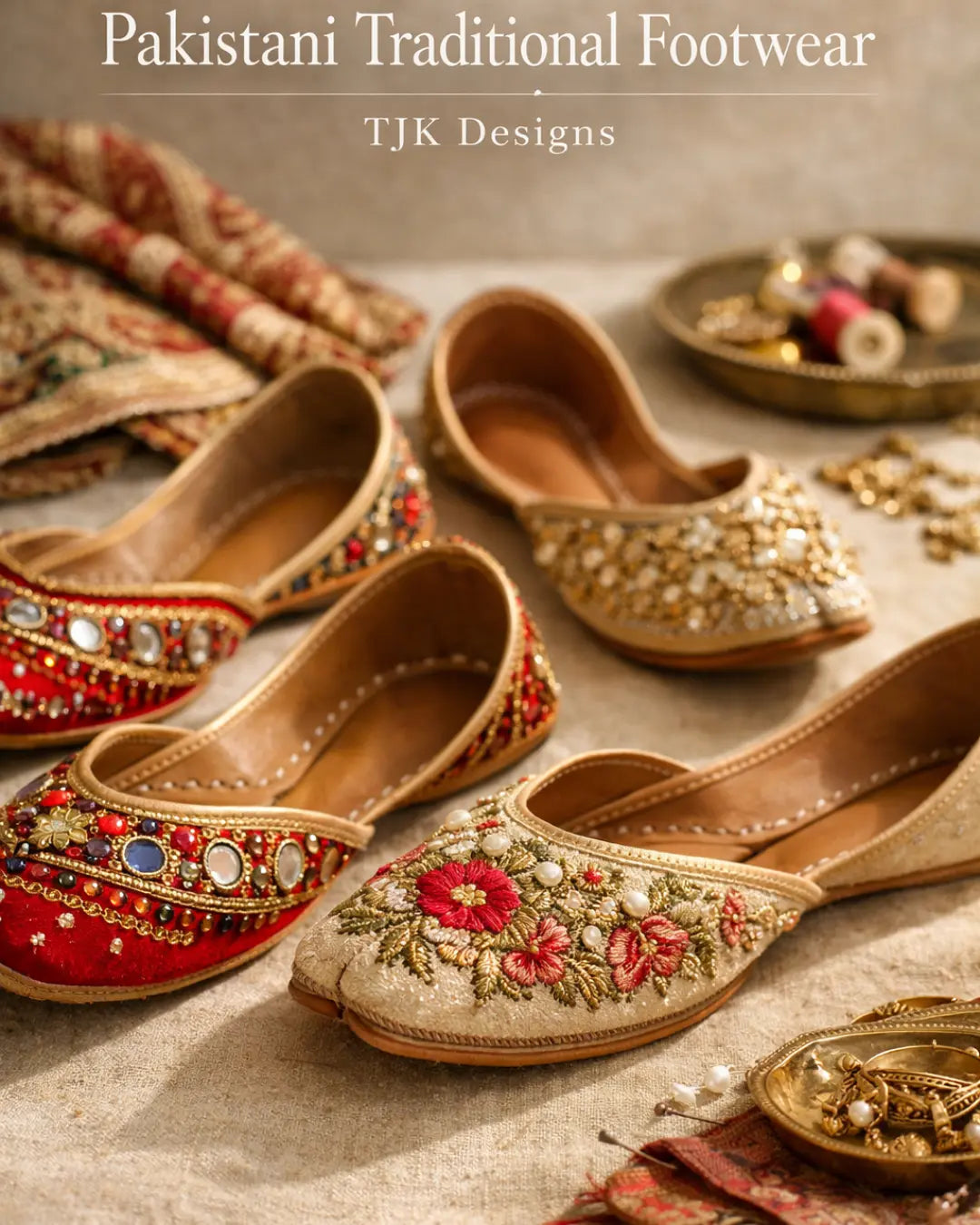
Royal khussa featured fine embroidery, gold and silver thread, pearls, and gemstones. Persian and Central Asian influences refined the pointed toe and introduced symmetrical patterns. What began as rural footwear became a symbol of wealth, power, and artistic excellence within imperial courts.
This era firmly positioned khussa as a cultural artifact rather than simple footwear.
Khussa as a Cultural Staple
By the eighteenth and nineteenth centuries, khussa spread beyond royal circles. Artisans in Multan, Bahawalpur, and Lahore adapted designs for everyday wear. These variations maintained hand stitched leather construction while simplifying decoration.
Khussa became closely tied to weddings, festivals, and traditional attire. Craftsmanship passed through generations, preserving stitching techniques and symbolic motifs. Museums and cultural galleries in Lahore display early khussa designs, reinforcing their historical value.
The transition from elite courts to common households strengthened the emotional connection people hold with khussa today.
At this stage, discussions around traditional footwear craftsmanship naturally align with heritage focused narratives
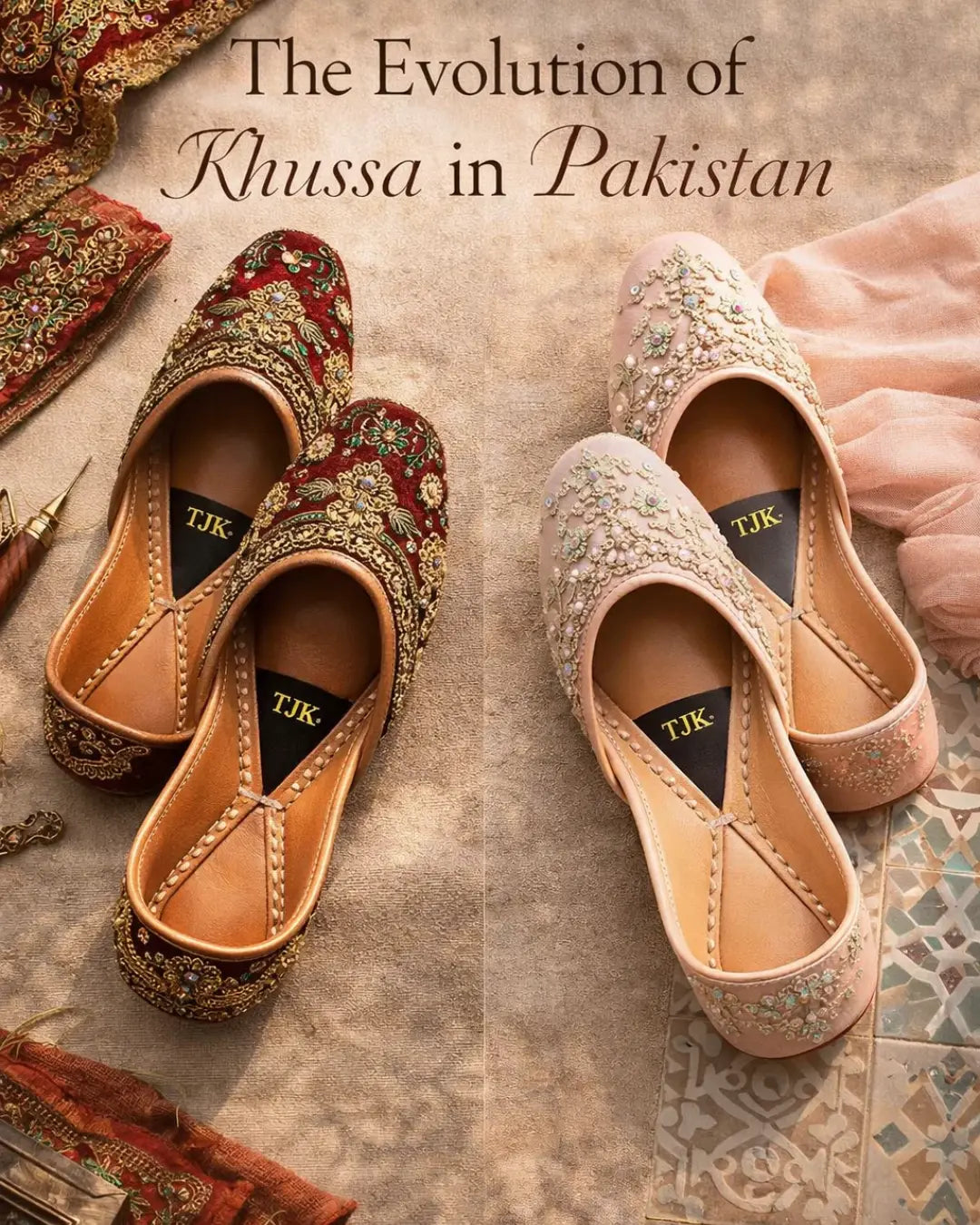
Read Our blog on : The Evolution of Khussa in Pakistan and Its Revival by TJK Designs
Khussa on Modern Runways
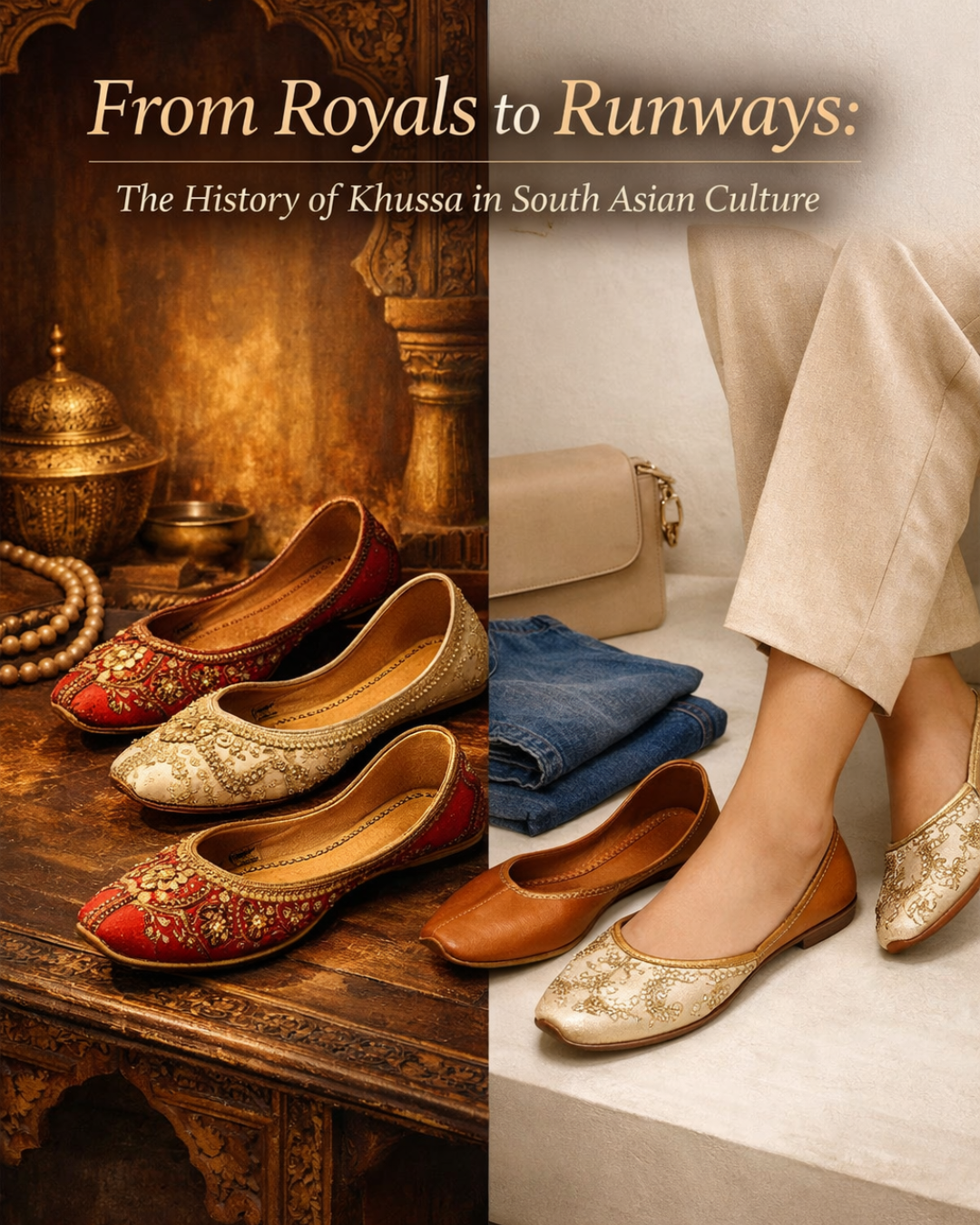
Khussa has successfully crossed into modern fashion without abandoning tradition. Designers now pair khussa with jeans, sarees, bridal wear, and formal outfits. In 2014, a diamond encrusted khussa from Pakistan gained international attention, highlighting its luxury potential.
Modern adaptations focus on comfort, versatility, and contemporary color palettes while preserving hand embroidery and leather shaping. This balance explains why khussa remains relevant across generations and global South Asian communities.
Craftsmanship That Defines Khussa
Khussa production follows precise steps that remain largely unchanged.
Leather Selection and Preparation
Artisans choose vegetable tanned leather for breathability and durability. The tanning process strengthens the material without chemical hardening.
Hand Stitching Techniques
Each pair is stitched by hand. Artisans use curved needles to maintain flexibility and ensure longevity.
Decorative Embellishments
Patterns vary by region. Multani khussa often features bold embroidery, while Lahore styles favor refined detailing.
This process keeps khussa authentic and distinguishes handmade pairs from mass produced alternatives.
Preserving Heritage Through TJK Designs
TJK Designs plays a key role in keeping khussa relevant without compromising its roots. Designs respect traditional techniques while adapting fits and styles for modern wear. Each collection reflects heritage values paired with everyday usability.
For individuals who value cultural authenticity with refined design, TJK Designs offers a trusted source for khussa rooted in tradition.
Why Khussa Still Matters Today
Khussa represents continuity. It connects past craftsmanship with present fashion. The history of khussa in South Asian culture proves that heritage adapts when respected rather than altered.
Modern consumers increasingly prefer footwear with meaning. Khussa fulfills this need by blending comfort, culture, and craftsmanship in one form.
Explore heritage inspired designs curated for modern lifestyles at TJK Designs
FAQs: People Also Ask
What is the history of khussa shoes?
Khussa shoes originated in pre Mughal South Asia as leather footwear adapted for hot climates. They later became royal footwear during the Mughal era and evolved into a cultural staple.
Where did khussa originate?
Khussa originated in regions of present day Pakistan and northern India, particularly Multan, Punjab, and Sindh, where leather craftsmanship was well established.
Who wore khussa in the Mughal era?
Mughal emperors, nobles, and court officials wore khussa, often heavily embroidered with gold, silver, and gemstones.
Are khussa shoes still handmade today?
Yes, authentic khussa shoes are still handmade using traditional leather cutting, stitching, and embroidery techniques.
What is the difference between khussa and mojari?
Khussa typically features a flatter sole and softer leather, while mojari often has a thicker sole and stiffer structure.